

- United States of America
- November 9, 2026
- wordle-nyt.org
Company Information
Wordle: A Simple Game with Surprising Staying Power
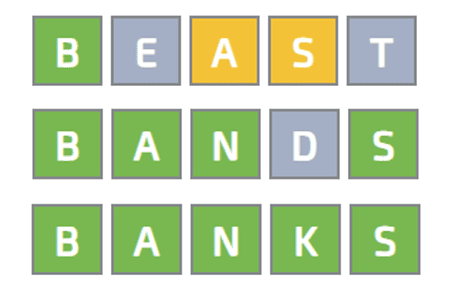
Wordle is a daily word puzzle built around a deceptively simple challenge: guess a five-letter word in six attempts. After each guess, colored tiles show how close the player is. Green means a letter is correct and in the right position; yellow means it appears in the answer but belongs elsewhere; gray means it is not in the word. These rules take moments to learn, but solving the puzzle can demand vocabulary, logic, and patience.
How the Game Works
Each guess must be a valid five-letter word. Players use the color clues to narrow down the possibilities. For example, if a guessed letter turns green, its position is confirmed. A yellow tile rules out that position but preserves the letter as a possible part of the answer. Gray tiles usually eliminate letters—though players must remember that an answer can contain a letter more than once.
The limited number of guesses is central to the experience. A player cannot simply test every possibility; each word must offer useful information. Some people begin with words containing common vowels and consonants, while others prefer a familiar word that helps them think clearly. There is no single perfect opening guess: the best strategy depends on whether the player values broad information, reliable patterns, or simply a satisfying start.
Why Wordle Became Popular
Wordle’s appeal comes partly from its restraint. One puzzle arrives each day, everyone receives the same answer, and play usually takes only a few minutes. The daily limit creates anticipation without demanding a long commitment. It also gives the game a natural social dimension: people can compare results, discuss tricky words, and share score grids without revealing the answer.
That shareable format helped Wordle spread widely. Its familiar grid of colored squares communicates how a game went while concealing the word itself. For many players, the puzzle became a small daily ritual—a chance to pause, think, and connect with friends or coworkers.
The game also rewards more than vocabulary. Players must interpret incomplete evidence, revise assumptions, and decide which guess will be most informative. In this way, Wordle resembles a compact exercise in deduction. A seemingly poor guess can still be useful if it tests several uncertain letters; a plausible word may be strategically weak if it repeats information already known.
Strategy, Luck, and Frustration
Wordle involves both skill and chance. Strong reasoning can reduce the number of possibilities, but an unlucky sequence of clues may leave several valid words for a final guess. A player who knows the pattern and letters in a word such as “_ATCH” might still have to choose among several answers. No strategy can guarantee success every day.
This uncertainty is part of the game’s charm, but it can also frustrate players. Some feel pressure to protect a long winning streak or compare their results with others. Others dislike answers that seem obscure, or worry that strategic advice turns a casual pastime into a competition. These reactions are a reminder that games designed for relaxation can acquire unexpected stakes when scores become public.
More Than a Puzzle
Wordle’s broader significance lies in how little it needs to be engaging. Its rules are transparent, its play is brief, and its shared daily answer creates community without requiring players to be online at the same time. At the same time, its popularity shows how quickly a simple idea can become a social habit—and how that habit can be shaped by competition, routine, and sharing.
Ultimately, Wordle works because it balances challenge with accessibility. Whether players aim for an efficient solve, enjoy the suspense of a final guess, or simply want a few minutes of wordplay, the game offers a small but satisfying daily test of attention and reasoning.